
Nigeria’s Mistaken Development Challenge
Nigeria’s Mistaken Development Challenge
Security, State Capacity, and the Cost of Misdiagnosis
When Development Is Misread
Nigeria is often described as a nation of enormous potential living below its capabilities. It is a familiar observation, almost a cliché. Yet beneath that phrase lies a harder truth. Nigeria’s challenge may not simply be a deficit of development. It may be, in part, a mistaken understanding of what has obstructed development itself.
For decades, development debates have centered on infrastructure deficits, weak industrialization, corruption, unemployment, and governance failure. These are real concerns. But there is a foundational question sometimes treated as secondary when it is in fact primary: Can meaningful development occur where state authority is contested, communities are repeatedly displaced, and insecurity erodes the social foundations of citizenship?
Without security, development is not merely slowed. It is structurally undermined. And this is where Nigeria’s development challenge may have been repeatedly misdiagnosed.
Security Is Not a Sectoral Problem—It Is a Development Problem
Over the past two decades, insecurity has increasingly shaped national life.
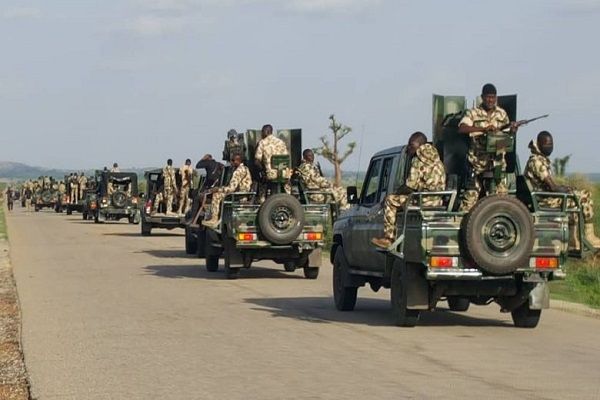
What began in public discourse as an insurgency challenge associated with Boko Haram evolved into wider patterns of violence involving terrorism, armed banditry, kidnapping for ransom, communal conflict, criminal networks, and repeated displacement of rural populations.
In many places, communities have experienced not isolated criminality but sustained disruption of livelihood, social order, and territorial security.
The consequences are developmental as much as humanitarian, resulting in the weakening of agricultural systems; collapse of rural economies; interrupted education for the displaced; decline of investment particularly in the rural areas; widespread internal displacements; and erosion of state legitimacy. These are not simple security crisis. It is a crisis of development itself.
The Problem of Surface Narratives
Much commentary often collapses these realities into the broad phrase “general insecurity.” The phrase is not wrong. But it can be insufficient. Because broad labels sometimes conceal complex drivers requiring differentiated responses. We have criminal violence, insurgency, resource conflicts, extremist mobilization, weak border governance, local grievances, and elite political failures.
These challenges may overlap, but they are not identical. And when distinct threats are collapsed into a single surface narrative, strategy can become reactive rather than diagnostic. A state cannot solve real problems when problems are not clearly framed and named.
Misdiagnosis as a Development Failure
This is where the phrase “mistaken development challenge” becomes especially relevant. Nigeria’s challenge may not only be insecurity itself, but persistent misdiagnosis of insecurity. Where root causes are underexamined, policy often focuses on symptoms. Containment replaces resolution. Operations replace strategy. Emergency response substitutes for long-term stabilization. And development planning proceeds as though insecurity is a disturbance at the margins rather than a structural threat to national cohesion. This is one of the deepest policy mistakes Nigeria continues to make.
Confronting Extremism Without Civilizational Generalization
There is an important distinction that must be preserved with intellectual discipline. Where extremist ideologies, militant networks, or violent religiously framed actors exist, they should be analyzed seriously and confronted decisively. But it is both inaccurate and dangerous to collapse such threats into broad claims about entire faith communities or to frame complex security crises as reducible to a single religious population.
Nigeria’s strength has long rested in fragile but vital plural coexistence. Public analysis must not erode that fabric. The real task is sharper and requires that we distinguish violent extremist threats from wider communities they do not represent. It is important to confront ideological militancy without feeding sectarian polarization, and to name organized threats clearly without turning diagnosis into civilizational suspicion. That distinction matters greatly and provides clarity in policy formulation and intervention initiatives.
What Government Must Do Differently
If the problem is deeper than surface narratives suggest, then response must also deepen. A few deliberate steps must be taken by those in public leadership to disaggregate issues and put things in their proper perspectives.
First, tell the Country the real Security truth: Citizens can handle difficult truths better than strategic ambiguity. Government should provide clearer national framing of the distinct threats confronting the country rather than relying on generalized language that obscures diagnosis. Clarity builds trust.
Second, treat security as State-building, not Policing alone: The answer is not only military operations. It includes restoring territorial governance, rebuilding local institutions, and securing vulnerable communities. Security is ultimately about state presence. When the State leaves off its territory on governed, it inevitable invites infiltrator to come and take over.
Third, integrate development and stabilization: Communities affected by violence need more than protection. They need reconstruction, livelihood recovery, education restoration, and justice mechanisms. Development policy and security policy cannot remain separate silos.
Fourth, address Ideological and Social Drivers of Extremism: Where extremist recruitment, radical narratives, or transnational militant influences exist, these require strategic prevention, not only force.
Fifth, Strengthen Honest National Dialogue: Politically difficult issues cannot remain permanently unspeakable. A mature democracy must be able to discuss security realities seriously without descending into fear, denial, or sectarian rhetoric.
Why This Is Also a Development Debate
Too often development is imagined as roads, power, ports, or GDP. But development is also whether citizens can remain on ancestral land without fear. Whether children can attend school safely. Whether farmers can cultivate. Whether communities trust the state to protect them. These are development indicators too. And perhaps more fundamental ones.
A nation cannot industrialize sustainably while parts of its social geography are destabilized. Security is not pre-development. It is part of development.
The Risk of Continued Evasion
If deeper structural drivers remain politically avoided, several risks will continue to grow and fester. For instance, chronic displacement may harden into permanent fragility; criminal and extremist ecosystems may become normalized; citizens may lose confidence in state protection; and development planning may continue to underperform because foundational instability remains unresolved.
That is why confronting reality matters. Not to dramatize crisis, not to deny discussing the intentional drivers of the problem, but to prevent deeper national drift.
Naming the Real Challenge
Nigeria’s development challenge may be mistaken not because analysts underestimate potential, but because too often the country’s most foundational obstacles are treated as secondary symptoms. No serious development vision can rest on surface narratives alone.
If insecurity includes deeper structural, ideological, territorial, and governance dimensions, then those realities must be addressed honestly. Government owes citizens not only reassurance, but diagnosis. Because nations rarely solve crises they refuse fully to name.
And development rarely advances where truth remains politically inconvenient. Nigeria does not only need more development projects. It needs clearer recognition that security, statehood, and national cohesion are themselves development questions.
Until that is understood, the country may continue mistaking symptoms for the challenge itself.
Future World Magazine publishes issue-focused thought leadership aimed at elevating public discourse beyond slogans toward deeper questions of governance, institutional resilience, and national purpose.