
Nigeria: Independent by Flag, Dependent by Design?
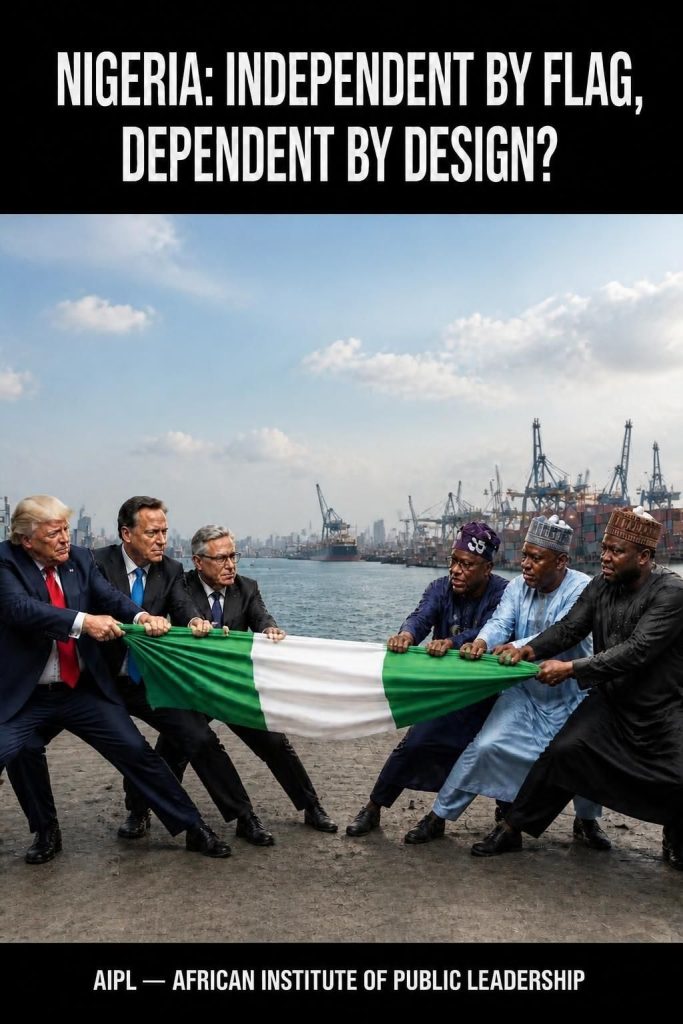
NIGERIA: INDEPENDENT BY FLAG, DEPENDENT BY DESIGN?
Colonialism, Corruption, and the Mask of Freedom
By Bassey Margaret
Are We Still Slaves to the West, or Are We Wearing a Mask?
On 1 October 1960, Nigeria gained independence from British colonial rule. The foreign flag came down, and a Nigerian flag rose in its place. But more than six decades later, a difficult question remains: did Nigeria truly break free from colonial control, or did the chains simply become less visible?”
1. The Beginning: How Colonialism Shaped Nigeria
British colonial rule transformed Nigeria’s political institutions, economy, and administrative systems. In 1914, the British amalgamated the Northern and Southern Protectorates into a single administrative unit. Nigeria eventually gained independence on 1 October 1960.
Colonial administration was designed primarily to maintain British authority and manage the territory. The British also introduced indirect rule, a system in which colonial officials governed through selected traditional authorities.
These arrangements influenced how power was exercised and how public administration developed. Colonial economic policies also connected Nigeria’s economy to overseas markets, particularly through the export of agricultural commodities. Historians have examined how these arrangements contributed to regional inequalities and shaped Nigeria’s postcolonial challenges.
However, Nigeria’s precolonial societies had their own political systems, leadership traditions, and commercial networks. Colonialism did not create every problem that Nigeria faces today, but it significantly reshaped the institutions through which the country was governed.
2. Did Colonialism Contribute to Corruption?
One important historical question is whether colonial administration helped establish conditions in which corruption could flourish.
Research examining financial records from colonial Nigeria between 1950 and 1960 found documented cases of fraud in public administration. The study also found that proven cases were not always sanctioned as required by law, potentially contributing to a culture of impunity after independence.
This raises an important issue: what happens when people learn that abusing public office may carry little or no consequence?
When financial misconduct is tolerated, public resources can become vulnerable to misuse. If officials believe they can avoid accountability, dishonest practices may become embedded in institutions.
Nevertheless, it would be historically inaccurate to blame colonialism alone for corruption in modern Nigeria. Corruption existed in different forms before independence, and Nigerian political and military leaders made decisions that influenced how governance developed after 1960.
3. The Mask of Independence: Are We Still Dependent on the West?
Political independence gave Nigeria the right to govern itself. But political sovereignty does not automatically guarantee economic independence.
A country may control its territory and elect its leaders while remaining heavily dependent on foreign investment, imported technology, overseas markets, external financing, or international expertise.
However, foreign relationships do not automatically amount to colonial control. International trade, borrowing, investment, and cooperation can also support development.
4. What Would True Independence Look Like?
Nigeria’s future does not depend on isolation from the rest of the world. It depends on developing the capacity to engage with the world on fair and sustainable terms.
Several priorities could help strengthen that capacity:
Economic diversification: Developing agriculture, manufacturing, technology, and other productive industries can reduce excessive dependence on a narrow range of exports.
Transparent governance: Public contracts, budgets, and expenditure should be subject to appropriate scrutiny.
Strong institutions: Anti-corruption bodies, courts, auditors, and other oversight institutions need the independence and capacity to perform their duties effectively.
Education and innovation: Investment in skills, research, and technology can help Nigerians create more solutions domestically.
Responsible leadership: Public officials must prioritise the public interest and be held accountable for misconduct.
Informed citizenship: Citizens need access to reliable information to evaluate government decisions and participate meaningfully in public life.
These measures would not eliminate every development challenge, but they could strengthen Nigeria’s ability to make independent decisions and ensure that national resources benefit its population.
Perhaps the most important question is, have we inherited the chains of colonialism, or have we forged new ones through corruption, poor governance, and misplaced priorities?