

The Prison of Your Own Mind
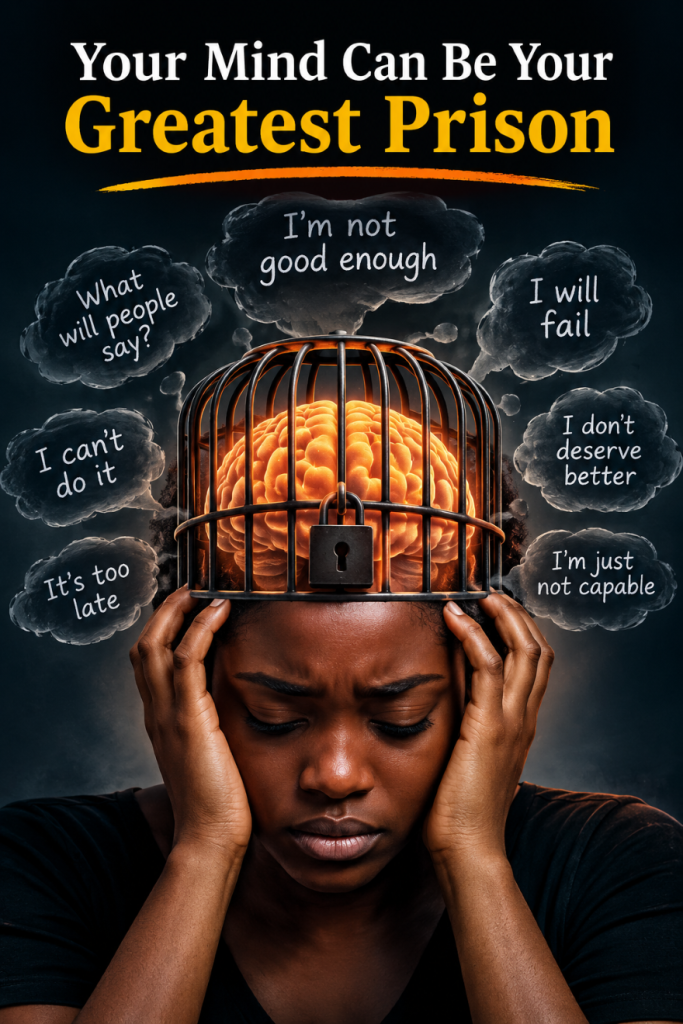
The Prison of Your Own Mind
By: Bassey Margaret
A prison is usually imagined as a place surrounded by walls, locked doors and chains. But there is another kind of prison that has no walls, no guards and no visible locks—the human mind.
Sometimes, the greatest thing holding us back is not our circumstances, our family, our financial situation or even other people. Sometimes, it is what we have convinced ourselves to believe about who we are and what we are capable of becoming.
When the mind becomes a prison
Our minds are incredibly powerful. They can motivate us to achieve great things, but they can also create limitations that feel completely real.
A person may think, “I’m not good enough.”
Another may think, “People like me don’t succeed.”
Someone else may believe, “It’s too late for me to start again.”
Over time, these thoughts can become beliefs. And when we repeatedly believe something, we may begin to behave as though it is a fact—even when it isn’t.
That is how the mind can become a prison.
The prison of fear
Fear is one of the strongest bars of this invisible prison.
Fear of failure can stop someone from trying.
Fear of rejection can prevent someone from expressing their feelings.
Fear of embarrassment can stop someone from pursuing opportunities.
Fear of what people will say can keep someone trapped in a life they don’t actually want.
The strange thing about fear is that sometimes nothing has actually happened yet. The person is suffering because of something that might happen.
They haven’t failed, but they’re afraid of failing.
They haven’t been rejected, but they’re afraid of rejection.
They haven’t been judged, but they’re afraid of being judged.
The mind creates a possible future, and the body reacts as though that future is already happening.
The prison of the past
Our past experiences can also influence the way we see ourselves.
Someone who was constantly criticized as a child may grow up believing they are never good enough.
Someone who experienced betrayal may struggle to trust people again.
Someone who failed several times may begin to believe they are simply incapable of succeeding.
The past can teach us important lessons, but there is a danger in allowing it to become a permanent definition of who we are.
Something happened to you. That does not necessarily mean it has to determine who you become.
Your past may explain some of your fears, but it does not have to control your future.
The prison of other people’s opinions
Another powerful prison is the need for approval.
We often allow other people’s opinions to influence our decisions more than we realize.
We may choose a career because our family approves of it.
We may dress a certain way because we want people to accept us.
We may remain in unhappy relationships because we are afraid of what others will say if we leave.
Social media has made this even more complicated. We constantly see other people’s achievements, relationships, bodies, lifestyles and expensive possessions.
Without realizing it, we begin comparing our ordinary lives with carefully selected pieces of someone else’s life.
And slowly, we begin to feel like we are not doing enough.
The prison of comparison
Comparison can make someone feel like a failure even when they are making progress.
You may look at someone who is 25 and already successful and wonder why you haven’t achieved the same thing.
You may see someone getting married while you’re still single.
You may see someone buying a house while you’re struggling to pay your bills.
But everyone is living a different story.
Someone else’s timeline is not a measurement of your worth.
Life isn’t a race where everyone is supposed to reach the same destination at the same time.
The mind can turn assumptions into reality
One of the most fascinating things about the human mind is how easily we can mistake our thoughts for facts.
Think about the difference between:
“I failed at this.”
and
“I am a failure.”
The first describes an event.
The second turns the event into an identity.
A person who repeatedly tells themselves “I am a failure” may eventually stop trying. Not because they are incapable, but because they have already convinced themselves that trying is pointless.
This is how thoughts can influence behaviour.
And behaviour can influence results.
The person thinks they cannot succeed, so they don’t try.
They don’t try, so they don’t succeed.
Then the lack of success becomes “proof” that they were right all along.
The cycle continues.
Breaking the chains
Escaping the prison of your mind begins with recognizing that not every thought deserves to be believed.
Just because your mind tells you something doesn’t automatically make it true.
You can question your thoughts.
You can ask:
Is this actually a fact?
Where did I learn to think this way?
Am I judging myself based on one experience?
Would I speak to someone I love the way I speak to myself?
Sometimes, changing your life begins with changing the story you repeatedly tell yourself.
Freedom begins in the mind
This does not mean that every problem is simply “all in your head.” Real problems exist. Poverty, discrimination, difficult family situations, illness, unemployment and other circumstances can genuinely limit people.
But even when we cannot immediately change our circumstances, we can sometimes change the way we understand ourselves within those circumstances.
The goal isn’t to pretend everything is perfect.
The goal is to stop adding invisible chains to the difficulties that already exist.
Final thought
The most frightening prison may be the one you don’t realize you’re living in.
There are no walls to see.
No doors to unlock.
No guard standing outside.
Only thoughts, fears, beliefs and assumptions.
And sometimes, the key has been in your hands all along.
You are not every thought that enters your mind. You are not every mistake you’ve made. You are not the opinions people have about you. And your past does not have to be the final author of your story.
Sometimes, freedom begins when you finally question the beliefs that have been keeping you imprisoned.