

The Benefits and Risks of Food Supplements: What Everyone Should Know
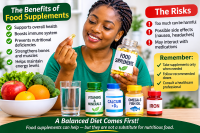
The Benefits and Risks of Food Supplements: What Everyone Should Know
By: Okunlola Christiana Omolola
Introduction
Food supplements have become increasingly popular as people look for ways to improve their health, boost immunity and maintain a balanced lifestyle. These supplements include vitamins, minerals, herbal products, protein powders and other nutrients designed to support the body’s nutritional needs.
Although food supplements can provide important health benefits, taking them without proper knowledge or guidance may also pose health risks.
Key Points
1. Supporting Overall Health
Food supplements can help provide essential nutrients that the body may not get in sufficient quantities from everyday meals. They can support normal body functions and general wellbeing.
2. Boosting the Immune System
Certain vitamins and minerals, such as vitamins C and D and zinc, support normal immune function and help the body maintain its natural defence system.
3. Preventing Nutritional Deficiencies
Supplements can help people who lack certain nutrients because of poor diets, medical conditions or increased nutritional needs. For example, iron supplements may help people diagnosed with iron deficiency.
4. Supporting Bone and Muscle Health
Calcium and vitamin D help maintain strong bones, while protein supplements may support muscle growth and recovery when dietary protein intake is inadequate.
5. Improving Energy and Reducing Deficiencies
Some supplements help correct nutritional deficiencies that can contribute to tiredness and weakness. However, supplements do not automatically increase energy in people who already get enough nutrients.
6. The Risk of Taking Too Many Supplements
Excessive consumption of certain vitamins and minerals can cause health problems. For example, too much vitamin A, iron or vitamin D can be harmful to the body.
7. Possible Side Effects and Drug Interactions
Some supplements may cause nausea, headaches, digestive problems or allergic reactions. They may also interact with prescribed medications and affect how they work.
8. The Importance of Professional Advice
Before taking any supplement, it is important to consult a qualified healthcare professional. This helps ensure that the product is appropriate, safe and taken in the correct amount.
Conclusion
Food supplements can play a useful role in maintaining good health when used appropriately. However, they should not replace a balanced diet, regular physical activity or proper medical care. Understanding their benefits and risks helps people make informed decisions about their health.
Remember: A healthy lifestyle begins with nutritious food, good habits and informed health choices