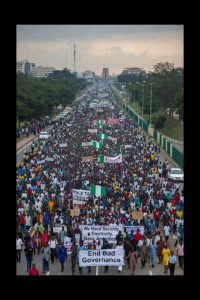

THE DANGEROUS PRICE OF RETAINING POLITICAL POWER IN A DEMOCRACY
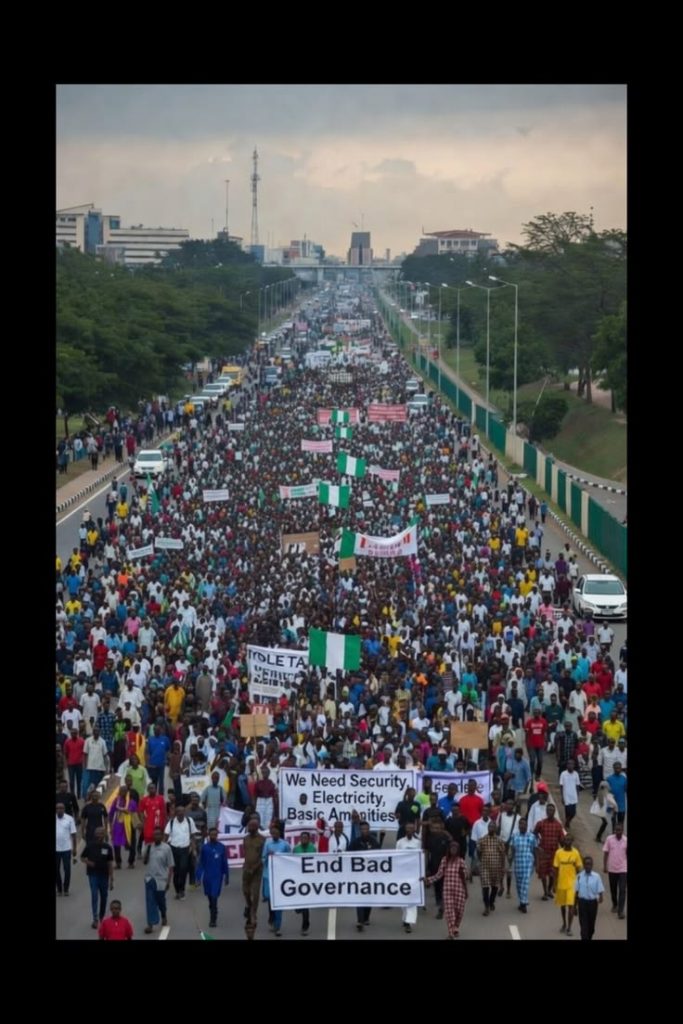
CONSCIENCE PURCHASE: THE DANGEROUS PRICE OF RETAINING POLITICAL POWER IN A DEMOCRACY
The Implications for Nigeria’s 2027 General Elections
By Joseph Chinenyeze Ibekwe
Democracy is founded on the sovereignty of the people. Its legitimacy derives from the freedom of citizens to determine who governs them, how they are governed and under what conditions political authority should be exercised. Yet, beneath the formal structures of electoral democracy lies a troubling phenomenon capable of undermining its very foundations: the deliberate purchase of the conscience of the electorate for the acquisition, preservation and retention of political power.
As Nigeria approaches the 2027 General Elections, this phenomenon deserves serious intellectual, moral and institutional attention.
The conventional conversation about electoral malpractice in Nigeria frequently centres on vote buying, electoral violence, ballot manipulation, voter intimidation and the abuse of incumbency. These are important concerns. However, there is a deeper democratic problem that deserves greater examination: Conscience Purchase.
Conscience purchase is the deliberate deployment of financial resources, material inducements, political patronage, institutional influence, identity manipulation and other instruments of persuasion or coercion to compromise the independent judgment, moral convictions and political choices of citizens for the purpose of acquiring or retaining political power.
It is more than an attempt to buy votes. It is an attempt to buy the mind, influence the judgment and ultimately secure the loyalty of the electorate.
Whereas vote buying seeks to influence an electoral decision, conscience purchase seeks to compromise the moral independence upon which responsible electoral decisions should rest.
This distinction is fundamental to understanding the future of democracy in Nigeria.
THE POLITICS OF PURCHASING PUBLIC CONSCIENCE
One of the greatest dangers to democracy is the emergence of a political culture in which financial capacity becomes more important than leadership capacity.
When political actors discover that they can secure public support by distributing money, providing temporary material benefits, cultivating dependent political networks and manipulating the economic vulnerabilities of citizens, the incentive to build genuine public trust diminishes.
Politics gradually becomes transactional. Leadership becomes an investment in political survival rather than an obligation to serve the public interest. Citizens become political targets to be mobilised through inducements rather than stakeholders whose confidence must be earned through responsible governance.
This is particularly dangerous in societies where poverty, unemployment, economic uncertainty and weak institutional accountability have created conditions in which immediate material benefits can outweigh long-term democratic considerations.
A citizen who receives money in exchange for political loyalty may consider the transaction beneficial in the immediate circumstances. However, the implications extend far beyond that individual transaction. The citizen may have surrendered an opportunity to demand better governance, challenge poor leadership and participate meaningfully in determining the future of the country.
In this sense, the purchase of a vote is not merely an electoral transaction. It can become a transaction against the future of the electorate itself.
BEYOND VOTE BUYING: THE BROADER ARCHITECTURE OF CONSCIENCE PURCHASE
Conscience purchase operates through several interconnected mechanisms.
- Economic Inducement
This is perhaps its most visible expression. Money, food, clothing, household materials and other benefits are distributed to influence electoral choices. The underlying strategy exploits economic vulnerability to secure political advantage. The danger is that citizens begin to evaluate political candidates according to what they can receive immediately rather than what those candidates can contribute to national development.
- Political Patronage and Dependency
Political patronage creates networks of beneficiaries whose personal or economic interests become tied to the continuation of particular political establishments. Appointments, contracts, empowerment opportunities and selective access to public resources can become instruments for cultivating political loyalty. When public opportunities are distributed primarily to secure political allegiance, governance is transformed into an instrument of political self-preservation.
- Ethnic, Religious and Regional Manipulation
Another manifestation is the exploitation of collective identity. Citizens are encouraged to defend political establishments because of ethnic, religious or regional affiliations, even when the performance of those establishments does not justify continued support. The argument becomes one of collective survival rather than leadership accountability. Consequently, political loyalty is elevated above competence, integrity and public responsibility.
- Information and Psychological Manipulation
The manipulation of public perception through propaganda, misinformation, selective narratives and manufactured political fear can also compromise independent political judgment. When citizens are consistently exposed to narratives designed to discourage critical evaluation, political support can become detached from objective assessments of leadership performance.
- Institutional Capture
Perhaps the most consequential manifestation occurs when public institutions and state resources are deployed to advance partisan interests. When institutions established to serve the public become instruments for protecting political establishments, the democratic environment becomes progressively compromised.
These mechanisms demonstrate that conscience purchase is not limited to the polling station. It can operate long before an election and continue throughout a political administration. Its ultimate objective is to make the retention of political power less dependent on public confidence and more dependent on networks of influence, inducement and manufactured loyalty.
THE INCUMBENCY QUESTION: GOVERNING TO SERVE OR GOVERNING TO SURVIVE?
Nigeria’s 2027 General Elections will provide another opportunity to examine the relationship between incumbency and democratic accountability.
Incumbency, in itself, is not a democratic offence. An administration that has performed responsibly should have every legitimate opportunity to seek another mandate from the electorate. Indeed, continuity can be beneficial where it is supported by demonstrated competence, institutional progress and public confidence.
The problem emerges when the instruments and advantages of incumbency are deployed to purchase political loyalty, weaken opposition or compromise the independence of citizens. There is a fundamental difference between retaining power because citizens believe an administration deserves another mandate and retaining power because citizens have been made economically, politically or psychologically dependent on its continuation.
The former represents democratic confidence. The latter raises serious questions about democratic integrity. A government must never confuse the resources of the state with the resources of its political party, nor should public authority be converted into an instrument for securing personal or partisan political survival.
The ultimate test of democratic leadership is not the ability to remain in office. It is the ability to govern responsibly and remain accountable to the people.
NIGERIA 2027: THE DANGER OF A MONETISED DEMOCRACY
As the 2027 elections approach, Nigerians must confront an uncomfortable possibility: that the country’s democratic process could become increasingly influenced by the financial capacity of political actors rather than the quality of their leadership propositions.
A monetised political environment creates an unequal democratic playing field. Candidates with greater financial resources may enjoy advantages that have little relationship with their competence, integrity or capacity to govern. Political parties may invest more in financial mobilisation than intellectual development, policy formulation and leadership preparation. Community leaders and influential individuals may become instruments of political transactions. Citizens may gradually lose confidence in the capacity of elections to produce meaningful political change. The consequences are significant.
First, it weakens political accountability. Leaders who believe that electoral support can be purchased may become less concerned about the quality of governance. Second, it undermines political competition. Candidates with credible ideas but limited financial resources may struggle against those who can deploy greater financial inducements.
Third, it encourages political opportunism. Political loyalty becomes negotiable, and political affiliations become instruments of personal advancement. Fourth, it promotes voter apathy. Citizens who believe that electoral outcomes are determined by money and manipulation may lose confidence in participating. Finally, it threatens the moral foundations of democratic citizenship.
A democracy can survive political disagreements. It can accommodate competing interests and ideological differences. But it cannot sustainably flourish where the conscience of its citizens becomes a commodity in the marketplace of political ambition.
THE ECONOMIC DIMENSION: POVERTY MUST NOT BECOME A POLITICAL ASSET
It would be intellectually dishonest to discuss conscience purchase without examining the economic conditions that make it possible. Poverty does not automatically make a citizen susceptible to electoral inducement. Neither does accepting material assistance necessarily indicate a compromised conscience.
Citizens experiencing economic hardship deserve dignity, support and opportunities, not condemnation. The responsibility, therefore, rests substantially on political leadership to create economic conditions that protect citizens from exploitation.
An administration that fails to address the economic vulnerabilities of its population while allowing those vulnerabilities to become instruments of political mobilisation raises serious questions about its commitment to democratic development.
Economic empowerment is consequently more than a development objective. It is also a democratic safeguard. A financially empowered citizen is generally better positioned to evaluate political choices without immediate economic desperation determining the outcome.
This is why the relationship between economic development and democratic integrity must receive greater attention in Nigeria’s national discourse. The objective should be to create a society where citizens do not have to choose between their immediate survival and their long-term democratic interests.
THE RESPONSIBILITY OF THE ELECTORATE: YOUR CONSCIENCE IS NOT FOR SALE
While political actors must be held accountable for electoral inducement and manipulation, citizens must also recognise their responsibility in protecting democratic institutions.
Democracy cannot be defended exclusively by electoral commissions, political parties, courts or security agencies. It requires citizens who understand the value of their political independence. The vote is not a gift from a politician. It is a constitutional right and an instrument of popular sovereignty.
A politician who distributes money to citizens does not purchase their permanent loyalty. A candidate who provides temporary assistance does not acquire ownership of the political judgment of the beneficiaries. Citizens must understand that political officeholders are public trustees, not personal benefactors.
The relationship between the governed and those who govern must be founded on accountability, responsibility and the public interest. Citizens should be free to receive legitimate public benefits, evaluate government programmes and make independent political choices without being compelled to exchange their electoral rights for material inducements. The conscience of the electorate must remain beyond the reach of political manipulation.
THE RESPONSIBILITY OF POLITICAL LEADERSHIP
There is an equally important responsibility on those who seek public office. Political leadership must be understood as a public trust rather than a contest for personal or institutional survival.
The pursuit of political power cannot justify every available means of securing it. A leader who purchases the conscience of citizens in order to retain power undermines the very democratic foundation upon which that power rests. Such conduct reflects a fundamental misunderstanding of leadership.
Public leadership is not the art of keeping people loyal to the leader. It is the responsibility of building institutions and systems that remain beneficial to society, irrespective of who occupies political office.
The measure of a political leader should not be the number of people whose loyalty can be purchased, but the number of lives and institutions transformed through responsible leadership. The ultimate achievement of leadership is not the preservation of one’s political position but the preservation of the public interest.
RECLAIMING THE MORAL FOUNDATIONS OF DEMOCRACY
Nigeria’s democratic development requires more than periodic elections and constitutional procedures. It requires a conscious effort to establish an ethical political culture. This effort must involve five important commitments.
First, the professionalisation of public leadership. Leadership must increasingly be evaluated through competence, ethical conduct, accountability, institutional responsibility and demonstrable capacity to serve.
Second, the democratisation of political education. Citizens must understand that electoral participation is an exercise of civic responsibility, not an opportunity to negotiate personal financial benefits.
Third, the enforcement of electoral laws. Electoral offences must attract meaningful consequences, irrespective of the political status, financial capacity or institutional influence of the offenders.
Fourth, the protection of institutional independence. Electoral and other public institutions must be sufficiently independent to resist partisan interference and protect the integrity of democratic competition.
Fifth, the strengthening of economic citizenship. A society that seeks to protect democratic independence must invest in economic opportunities, human development and the dignity of its citizens.
These commitments must extend beyond political campaigns. They must become part of the country’s long-term democratic development agenda.
A NEW DEMOCRATIC PRINCIPLE: THE SANCTITY OF POLITICAL CONSCIENCE
I propose that Nigeria’s democratic conversation should begin to embrace what may be described as the Sanctity of Political Conscience Principle.
This principle recognises that every citizen possesses an independent moral and civic responsibility to evaluate political leadership and exercise electoral rights without coercion, manipulation or material inducement.
It further establishes that no political leader, political party, institution or interest group should seek to purchase, compromise or manipulate the conscience of citizens for the acquisition, retention or exercise of political power.
The principle rests on three foundations:
- Freedom of Conscience: The right of citizens to make independent political judgments.
- Integrity of Leadership: The obligation of political actors to seek public office through legitimate democratic processes and retain public confidence through responsible governance.
- Accountability of Citizenship: The responsibility of citizens to protect their democratic rights and make informed political decisions.
This is not a partisan proposition. It is a democratic and ethical proposition that should apply equally to the ruling party, opposition parties, political candidates and the electorate. No political establishment should be exempt from this standard.
THE 2027 ELECTIONS MUST BECOME A TEST OF DEMOCRATIC CONSCIENCE
Nigeria’s 2027 General Elections should not be approached merely as another contest between political parties, candidates and competing political interests.
They should become an opportunity to examine the maturity of our democratic culture. The fundamental question must go beyond who will win. We must ask what kind of democracy we are building, what kind of political leadership we are rewarding and what kind of citizenship we are cultivating.
Are we building a democracy in which leadership is earned through competence, integrity and public confidence? Or are we gradually constructing a political environment in which financial power, patronage and manipulation determine who governs?
Are we raising citizens who can independently evaluate political leadership? Or are we creating generations whose political choices can be negotiated through temporary material benefits? These questions are too important to be left to political campaigns alone.
Nigeria needs a democratic culture in which political leaders understand that power is entrusted, not owned; citizens understand that their votes are rights, not commodities; and institutions understand that their loyalty belongs to the Constitution and the public interest, not to political establishments.
CONCLUSION: THE PRICE OF A COMPROMISED CONSCIENCE
A nation may recover from a poor electoral outcome. It may replace an ineffective administration, reform its institutions and correct the mistakes of political leadership. But when the conscience of its citizens becomes systematically compromised, the consequences are far more difficult to reverse.
The erosion of democratic conscience produces a society in which citizens may defend what should be challenged, celebrate what should be questioned and tolerate what should never be accepted. This is the deeper danger of conscience purchase.
When politicians purchase votes, they seek to influence an election. When they purchase consciences, they seek to influence the moral direction of a nation. And when citizens surrender their independent judgment for temporary benefits, they risk mortgaging the future of generations yet unborn.
Nigeria must therefore make a clear democratic choice in 2027. Political power must be earned through public confidence, not purchased through public vulnerability. Leadership must be sustained through responsible governance, not manufactured loyalty. Citizens must vote with their convictions, not their immediate financial desperation.
The conscience of a nation is too valuable to be placed on the negotiating table of political ambition. A democracy whose citizens can be bought may retain the appearance of popular sovereignty, but it gradually loses its moral substance.
Nigeria must not merely seek elections that produce winners. It must build a democracy that produces responsible leaders, conscientious citizens and enduring institutions.
The future of Nigerian democracy will depend, in no small measure, on whether the conscience of its people remains beyond the price of political power.
Joseph Chinenyeze Ibekwe, is initiator of Fledism philophy and is a leadership educator