

Breaking Barriers: The Rise of Women in Leadership
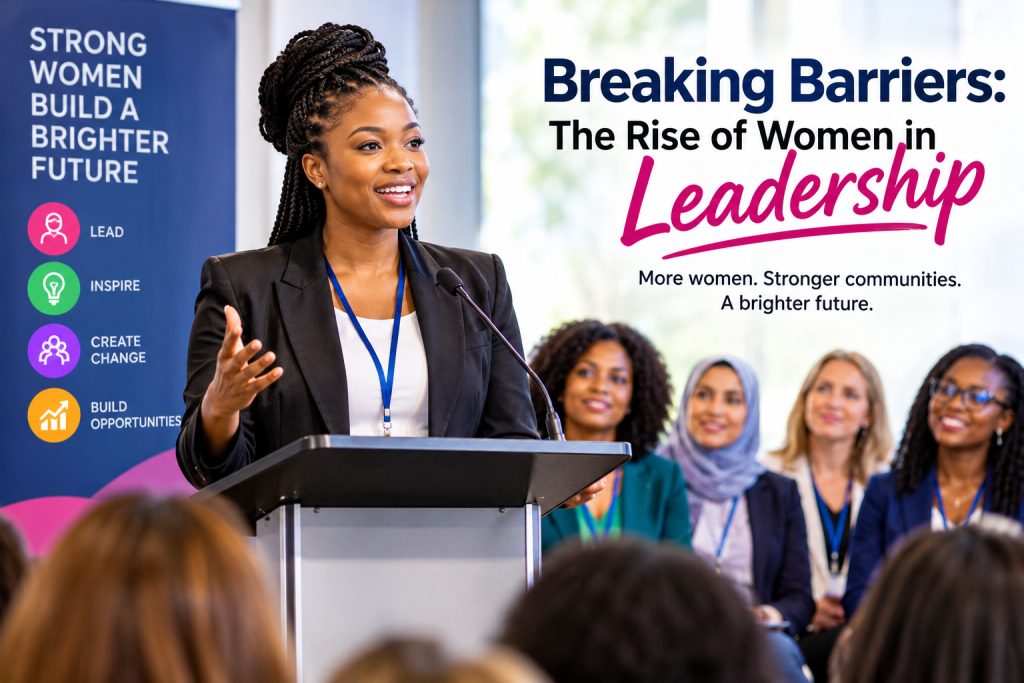
Breaking Barriers: The Rise of Women in Leadership
By: Okunlola Christiana Omolola
Introduction
Women’s leadership has become an important force in shaping modern society. Across the world, women are taking up leadership positions in politics, business, education, healthcare, technology, and community development. Their contributions are helping organisations grow, communities thrive, and nations move towards a more inclusive future.
Despite this progress, many women continue to face barriers that limit their opportunities to lead. Gender discrimination, cultural expectations, unequal access to education, and limited mentorship are among the challenges that prevent women from reaching their full potential.
Breaking these barriers requires collective effort from governments, organisations, families, and society. By promoting equal opportunities and recognising women’s abilities, society can create an environment where leadership depends on competence, integrity, and vision rather than gender.
Key Points on the Rise of Women in Leadership
1. The Growing Role of Women in Leadership
Women are increasingly taking on leadership roles in government, private businesses, schools, hospitals, and non-governmental organisations. Their participation brings different experiences, ideas, and perspectives to decision-making.
As more women enter leadership positions, they create opportunities for others to follow and demonstrate that leadership ability is not determined by gender.
2. Breaking Gender Stereotypes
One of the major barriers women face is the belief that leadership is primarily a man’s responsibility. Such stereotypes can discourage women from pursuing positions of authority, even when they possess the necessary skills and qualifications.
Challenging these beliefs through education, public awareness, and positive examples can help society recognise women’s capabilities and encourage equal opportunities.
3. The Challenges Women Face in Leadership
Women leaders may encounter discrimination, unequal pay, limited access to funding, and fewer opportunities for career advancement. In some workplaces, they must work harder to prove their competence and earn the same respect as their male colleagues.
Addressing these challenges requires fair recruitment practices, transparent promotion policies, supportive workplaces, and strong measures against discrimination and harassment.
4. The Importance of Education and Mentorship
Education equips women with the knowledge, confidence, and professional skills needed to succeed in leadership. Mentorship also provides guidance, encouragement, and valuable connections that can help women navigate professional challenges.
Governments, schools, businesses, and community organisations should invest in leadership training, scholarships, and mentoring programmes for girls and women.
5. Women’s Leadership in Politics and Governance
Women’s participation in politics helps ensure that a wider range of experiences and concerns is represented in public decision-making. Women leaders can contribute to discussions about education, healthcare, economic development, family welfare, and social protection.
However, women need fair access to political opportunities, adequate campaign resources, and protection from intimidation and gender-based discrimination to participate fully in governance.
6. The Impact of Women in Business and Entrepreneurship
Women entrepreneurs create jobs, introduce innovative ideas, and contribute to economic growth. As business leaders, they can support other women through employment, professional development, and business partnerships.
Providing women with access to finance, business training, technology, and markets can help them establish successful enterprises and expand their influence in the economy.
7. The Role of Society in Empowering Women
Promoting women’s leadership is not the responsibility of women alone. Families, men, educational institutions, employers, religious organisations, and governments all have important roles to play.
Society can support women by challenging harmful stereotypes, sharing family responsibilities fairly, providing equal opportunities, and recognising women’s achievements in different fields.
8. Inspiring the Next Generation of Women Leaders
Successful women leaders serve as role models for girls and young women. Their achievements show that determination, education, hard work, and courage can help people overcome obstacles and achieve their ambitions.
Schools and communities should encourage girls to participate in leadership activities, public speaking, entrepreneurship, science, technology, and decision-making from an early age.
Strategies for Breaking Barriers
The following measures can help increase women’s participation in leadership:
-
Promote equal opportunities: Ensure that women and men have fair access to leadership positions and career advancement.
-
Invest in education: Provide girls and women with quality education and professional training.
-
Expand mentorship programmes: Connect aspiring women leaders with experienced professionals who can offer guidance.
-
Improve access to finance: Help women entrepreneurs obtain funding and business support.
-
Strengthen workplace policies: Prevent discrimination and harassment while encouraging fair promotion practices.
-
Recognise women’s achievements: Highlight the contributions of women leaders to inspire future generations.
Conclusion
The rise of women in leadership represents an important step towards a more inclusive, fair, and progressive society. Women have demonstrated their ability to lead organisations, influence public policy, build successful businesses, and transform communities. However, their progress should not depend solely on personal determination; they also need systems that provide equal opportunities and remove unfair barriers.
Breaking these barriers requires a commitment to education, mentorship, gender equality, and inclusive decision-making. When women are given the opportunity to lead, society benefits from a broader range of talents, ideas, and experiences.
Women’s leadership is not simply about giving women a seat at the table; it is about ensuring that their voices are heard, their abilities are recognised, and their contributions are valued. A society that empowers women to lead creates a stronger foundation for future generations.